This is default featured slide 1 title

Go to Blogger edit html and find these sentences.Now replace these sentences with your own descriptions.

This is default featured slide 2 title

Go to Blogger edit html and find these sentences.Now replace these sentences with your own descriptions.

This is default featured slide 3 title

Go to Blogger edit html and find these sentences.Now replace these sentences with your own descriptions.

This is default featured slide 4 title

Go to Blogger edit html and find these sentences.Now replace these sentences with your own descriptions.

This is default featured slide 5 title

Go to Blogger edit html and find these sentences.Now replace these sentences with your own descriptions.

Friday, June 30, 2023

The long history and bright future of space sample deliveries

When NASA's OSIRIS-REx spacecraft releases a capsule with material from asteroid Bennu onto the Utah desert on Sept. 24, it will become the latest in a line of missions to gather samples from space and deliver them to Earth. Collecting material from space is a challenging feat that requires teams of dedicated scientists and engineers, innovative technology, and patience. But the scientific breakthroughs these samples unlock make the effort worthwhile as we attempt to understand the origins of our planet and the life that thrives here.

Thursday, June 29, 2023

ALMA digs deeper into the mystery of planet formation

An international research team used the Atacama Large Millimeter/submillimeter Array (ALMA) to observe disks around 19 protostars with a very high resolution to search for the earliest signs of planet formation. This survey was motivated by the recent findings that planet formation may be well underway in the more-evolved proto-planetary disks, but until now there had been no systematic study to search for signs of planet formation in younger protostellar systems. Their research has been published in The Astrophysical Journal.

Wednesday, June 28, 2023

World's largest filled-aperture radio telescope finds missing link in evolution of spider pulsar system

Researchers from the National Astronomical Observatories of the Chinese Academy of Sciences (NAOC) and their collaborators at home and abroad have discovered a binary pulsar with a 53-minute orbital period using the Five-hundred-meter Aperture Spherical radio Telescope (FAST). The discovery of this binary system—named PSR J1953+1844 or M71E—fills the gap in the evolution of spider pulsar systems. The findings were published in Nature on June 20.

Tuesday, June 27, 2023

Nancy Grace Roman space telescope could detect supermassive dark stars

The first stars of the universe were very different than the stars we see today. They were made purely of hydrogen and helium, without heavier elements to help them generate energy in their core. As a result, they were likely hundreds of times more massive than the sun. But some of the first stars may have been even stranger. In the early universe, dark matter could have been more concentrated than it is now, and it may have powered strange stellar objects known as dark stars.

Monday, June 26, 2023

New millisecond pulsar detected with FAST

Using the Five-hundred-meter Aperture Spherical radio Telescope (FAST), a team of Chinese astronomers has detected a new millisecond pulsar in the globular cluster Messier 53. The finding is reported in a research paper published June 16 on the pre-print server arXiv.

Sunday, June 25, 2023

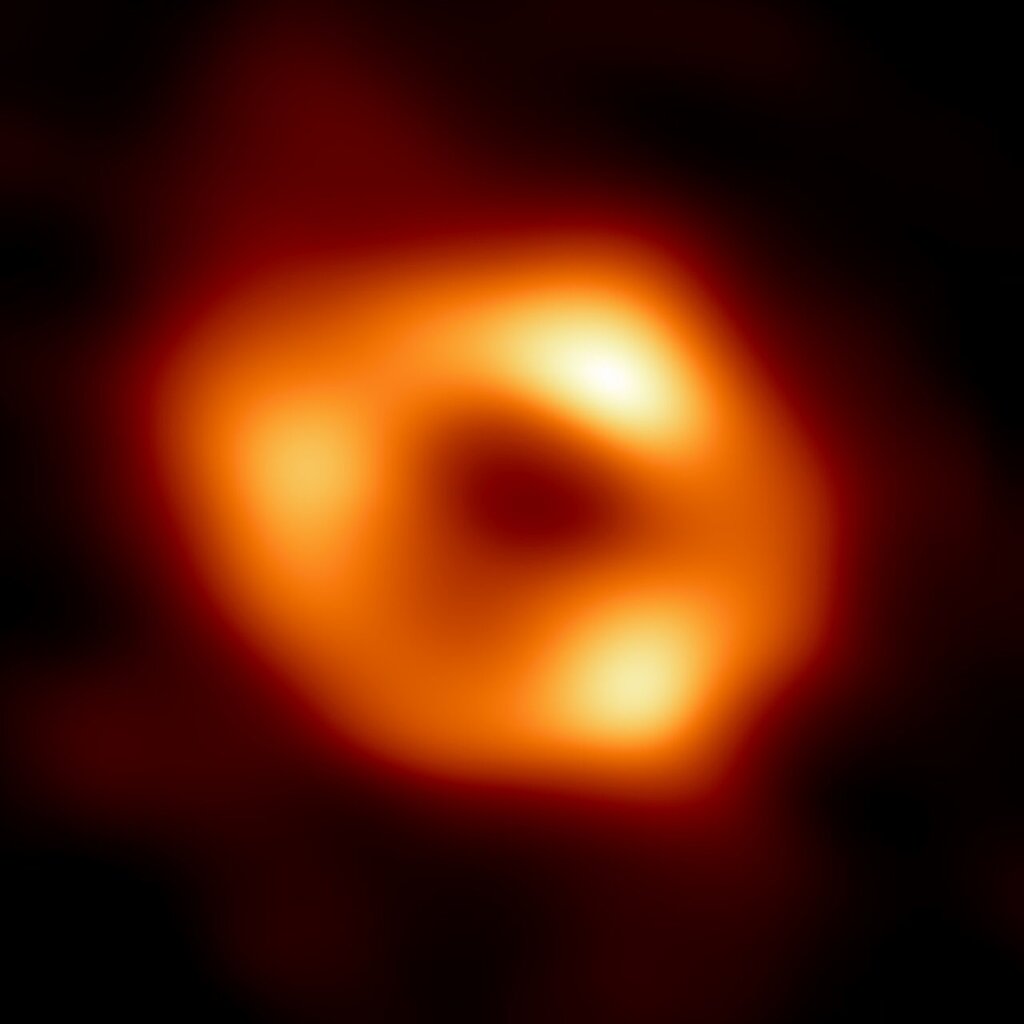
Our galaxy's black hole not as sleepy as thought: astronomers

The supermassive black hole lurking at the center of our Milky Way galaxy is not as dormant as had been thought, a new study shows.

Saturday, June 24, 2023

NASA's MAVEN spacecraft stuns with ultraviolet views of red planet

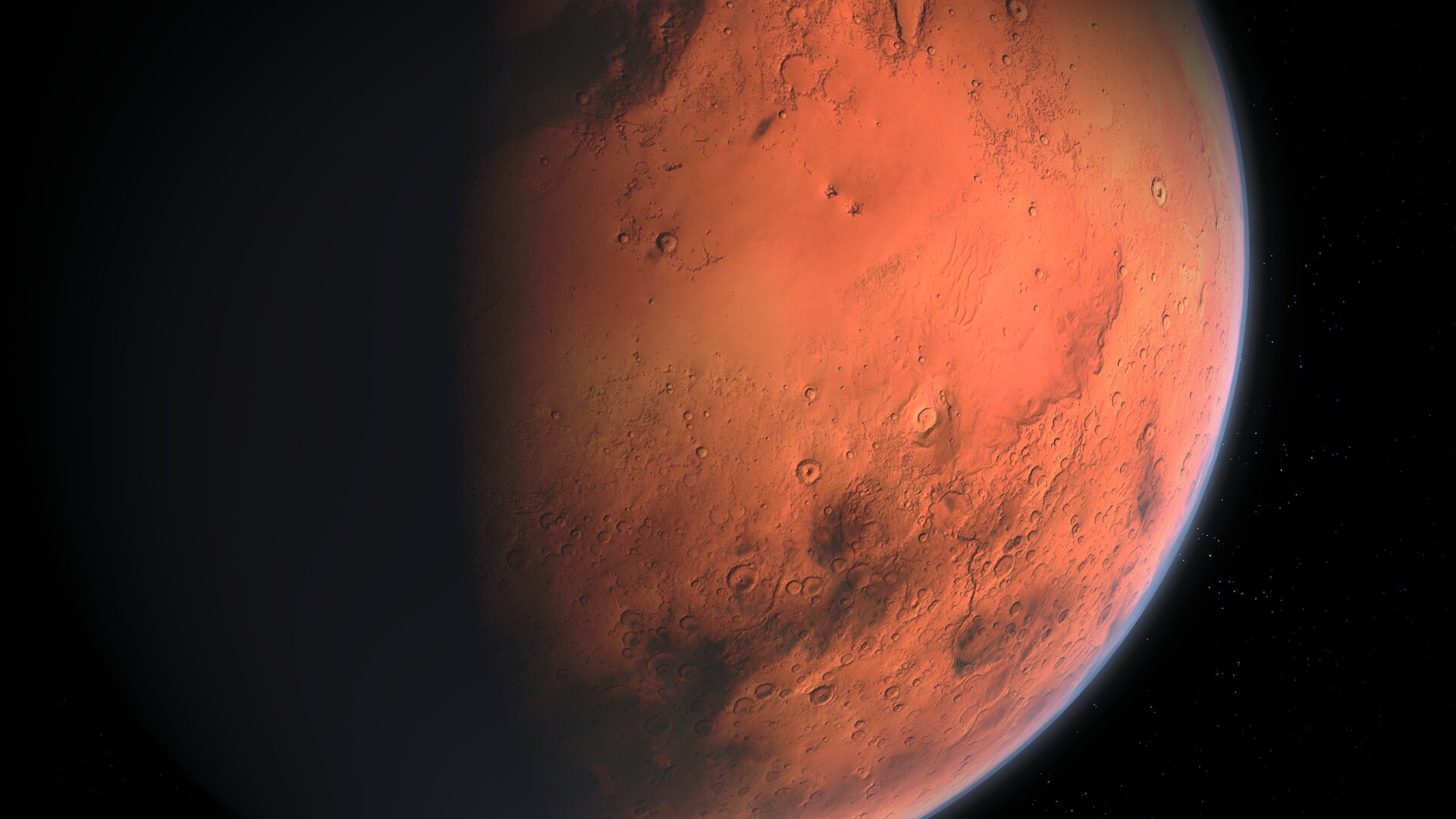
NASA's MAVEN (Mars Atmosphere and Volatile EvolutioN) mission acquired stunning views of Mars in two ultraviolet images taken at different points along our neighboring planet's orbit around the sun.

Friday, June 23, 2023

Einstein and Euler: Accelerating expansion of the universe and dark matter theories put to the test

The cosmos is a unique laboratory for testing the laws of physics, in particular those of Euler and Einstein. Euler described the movements of celestial objects, while Einstein described the way in which celestial objects distort the universe.

Astronomers discover new mini-Neptune exoplanet

An international team of astronomers reports the discovery of a new mini-Neptune exoplanet orbiting a nearby star. The newfound alien world, designated TOI-2018 b, is about two times larger and nine times more massive than the Earth. The finding was detailed in a paper published June 13 on the pre-print server arXiv.

Thursday, June 22, 2023

Discovery of a brown dwarf hotter than the sun

An international team of astronomers has discovered a planet-like object that is hotter than the sun. Their report has been accepted for publication in the journal Nature Astronomy and is currently available on the arXiv pre-print server.

Wednesday, June 21, 2023

Binary star system 1RXS J165424.6-433758 revealed to be polar, new observations find

An international team of astronomers has performed X-ray, ultraviolet, and optical observations of an X-ray source known as 1RXS J165424.6-433758. Results of the observational campaign, published June 8 on the pre-print server arXiv, shed more light on the nature of this source, providing evidence that it is a polar.

Tuesday, June 20, 2023

Where was the sun? Here's why astronomers are more useful in court cases than you'd think

Over the past eight years, I have been asked to submit astronomical evidence for court cases all over Australia.

Monday, June 19, 2023

New millisecond pulsar discovered with the Green Bank Telescope

Using the Green Bank Telescope (GBT), astronomers from Columbia University and the University of California Berkeley have detected a new binary millisecond pulsar. The newly found pulsar, designated PSR J0212+5321, belongs to the "redback" subclass and is located relatively nearby. The finding was reported June 8 on the arXiv pre-print server.

Sunday, June 18, 2023

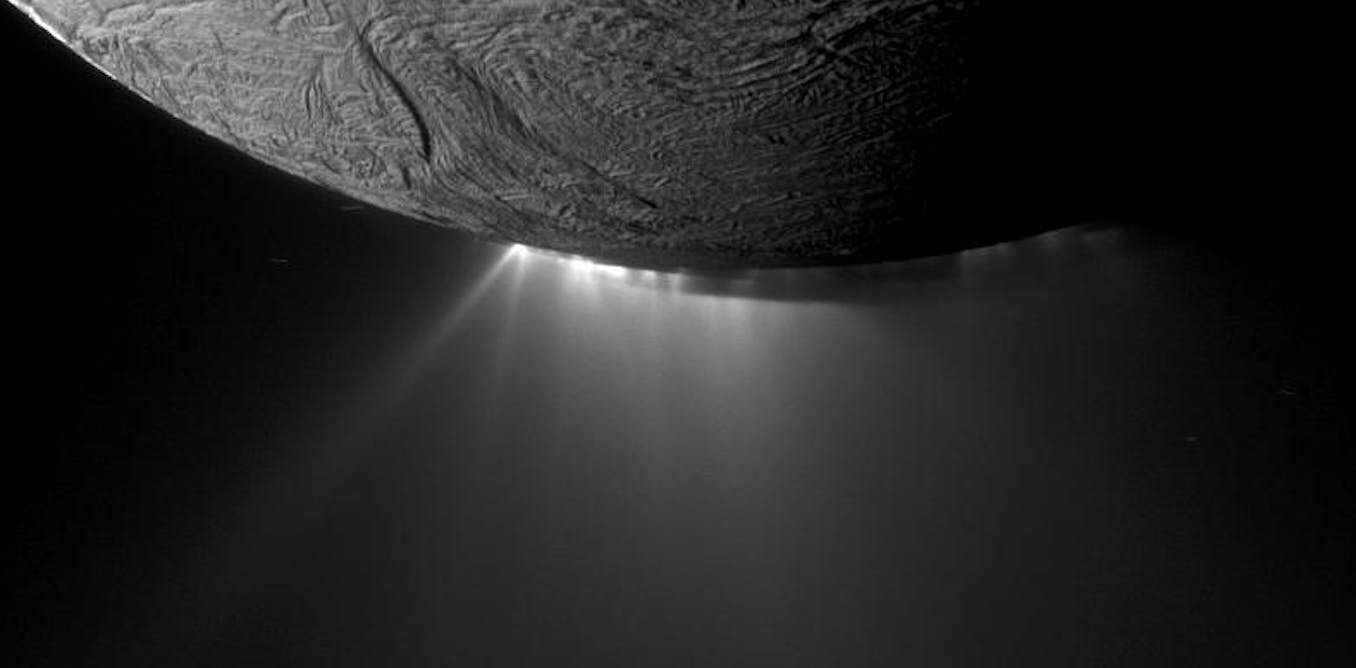
NASA finds key building block for life in a moon of Saturn

The long hunt for extraterrestrials just got a big boost.

An element essential to life discovered on one of Saturn's moons, raising hopes of finding alien microbes

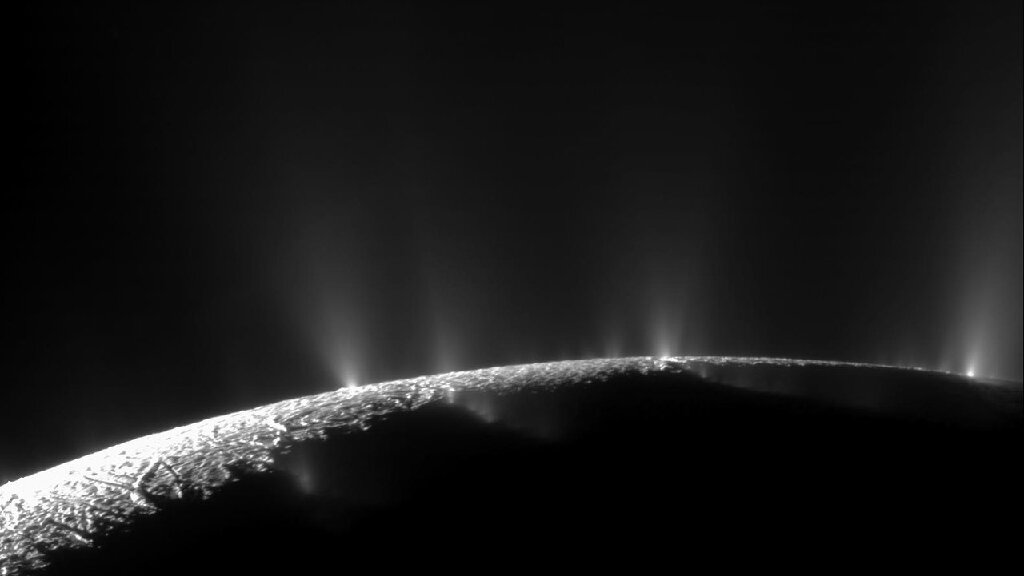
Enceladus is the tiny moon of Saturn that seems to have it all. Its icy surface is intricately carved by ongoing geological processes. Its icy shell overlies an internal, liquid ocean. There, chemically charged warm water seeps out of the rocky core onto the ocean floor—potentially providing nourishment for microbial life.

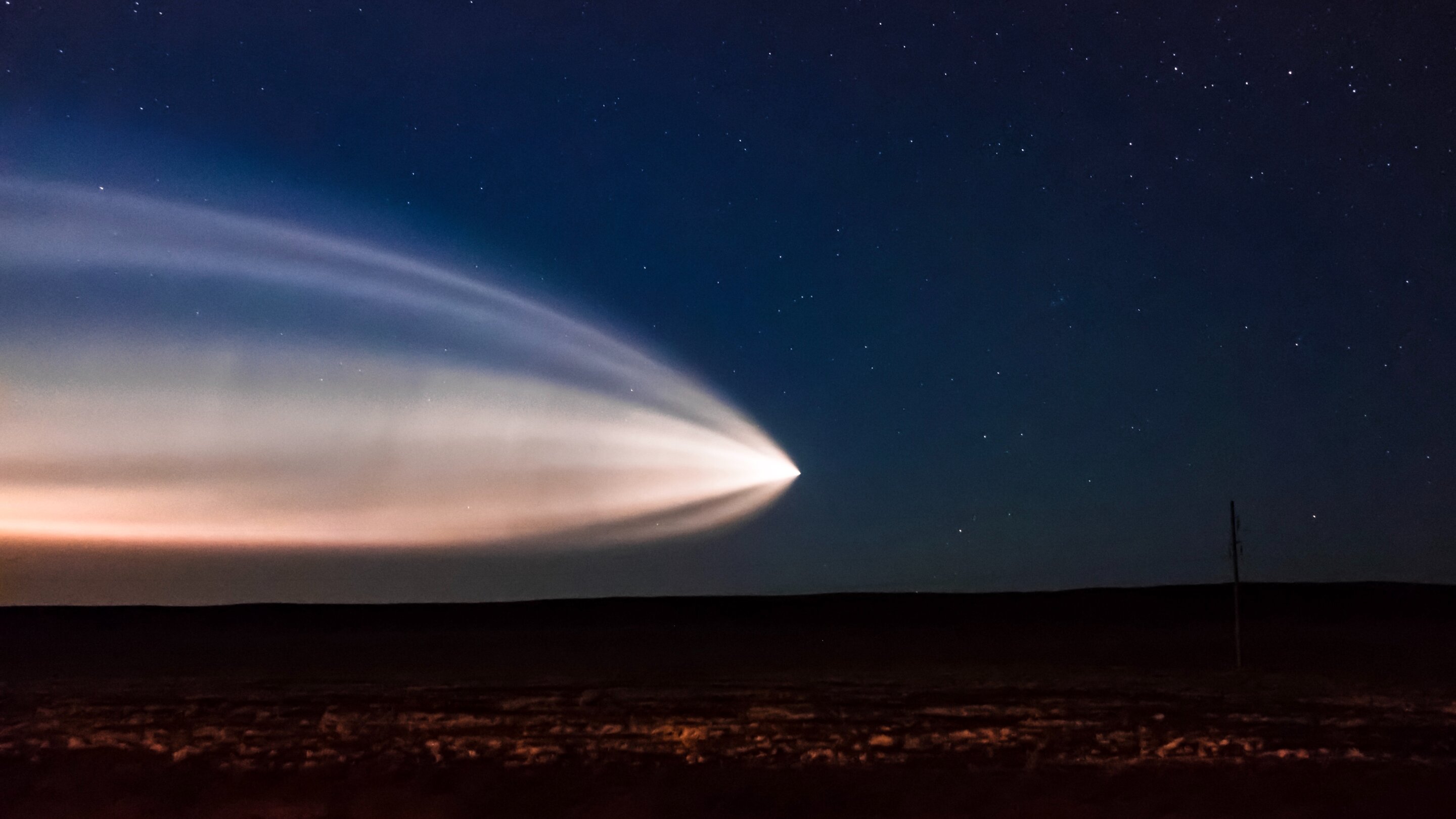
Spanish rocket launch aborted due to last-minute glitch

The maiden flight of Spain's first rocket was aborted Saturday after countdown ended because of a last-minute technical problem, the start up PLD Space said.

Saturday, June 17, 2023

Virgin Galactic to send Italian researchers to space, then regular commercial flights

Virgin Galactic announced Thursday that monthly commercial flights to the edge of space will begin for ticket-holders in August, following a research flight planned for the end of June.

Friday, June 16, 2023

Astronomers unbury radio emissions from CIZA galaxy cluster

Astronomers have used a newly upgraded world-leading radio telescope to unbury the radio emissions from a galaxy cluster known as CIZA1359. The signal has until now been buried in noise from a nearby foreground object.

Thursday, June 15, 2023

Study claims Earth was created much faster than we thought

When we walk around in our everyday life, we might not think of the Earth itself very often. But this planet is the foundation of our life. The air we breathe, the water we drink and the gravity that pins us to the ground.

Wednesday, June 14, 2023

RRAT J1913+1330 is an extremely variable pulsar, study finds

Using the Five-hundred-meter Aperture Spherical Radio Telescope (FAST), astronomers from the Purple Mountain Observatory (PMO) in Nanjing, China, have observed a pulsar known as RRAT J1913+1330. Results of the observational campaign, published June 5 on the arXiv pre-print server, indicate that it is an extremely variable pulsar with peculiar properties.

Tuesday, June 13, 2023

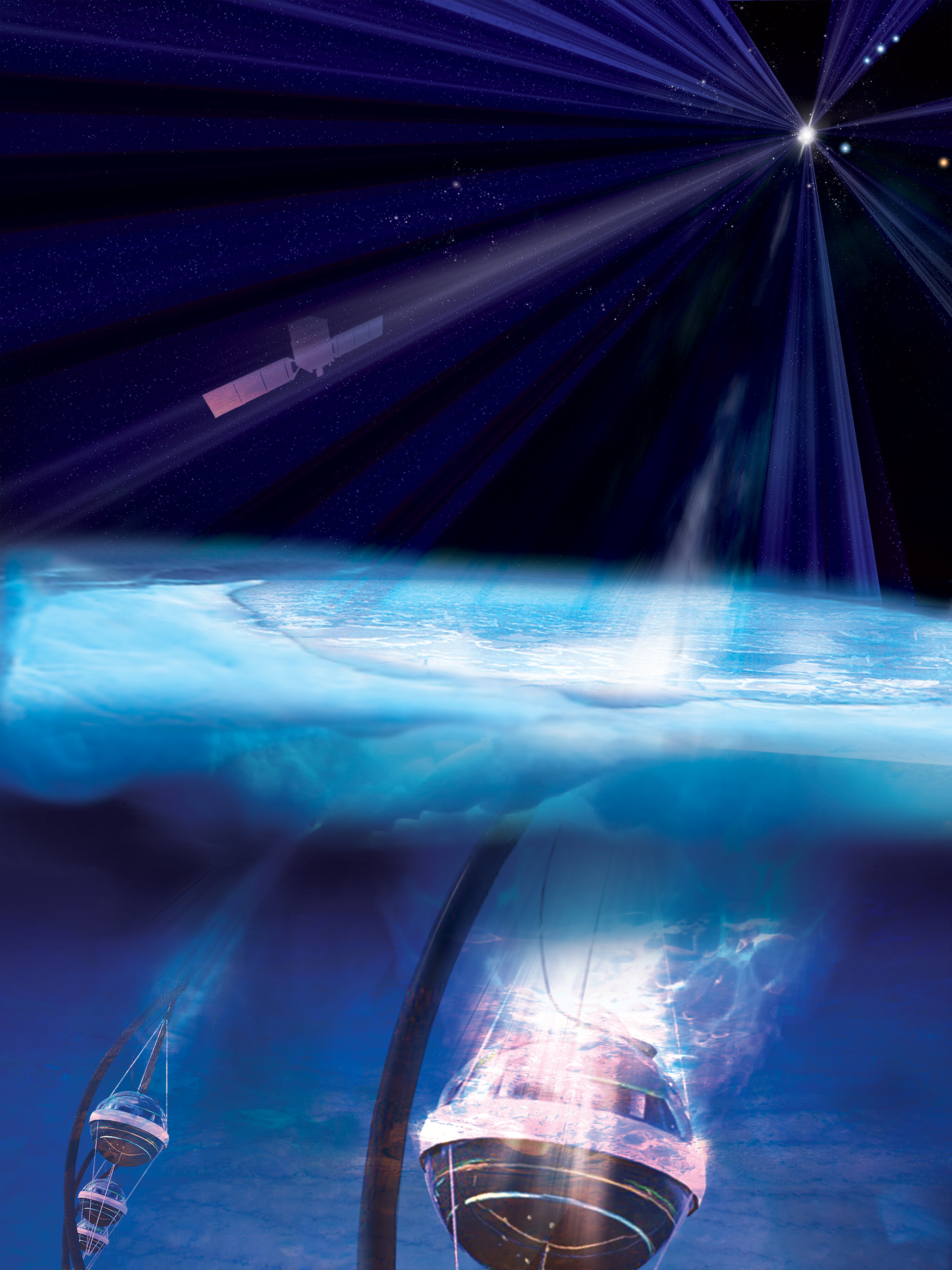
Unveiling quantum gravity: New results from IceCube and Fermi data

In a study published in Nature Astronomy, a team of researchers from the University of Naples "Federico II," the University of Wroclaw, and the University of Bergen examined a quantum-gravity model of particle propagation in which the speed of ultrarelativistic particles decreases with rising energy.

Monday, June 12, 2023

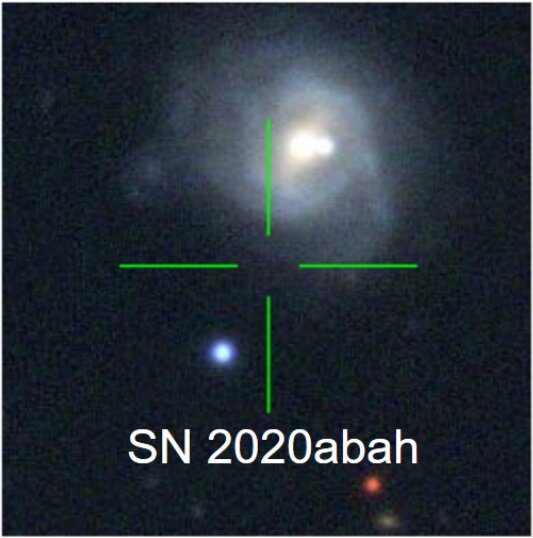
Astronomers discover 12 new long-rising Type II supernovae

An international team of astronomers reports the detection of 12 new long-rising Type II supernovae as part of the Zwicky Transient Facility (ZTF) Census of the Local Universe (CLU). The discovery, published June 1 on the arXiv pre-print repository, nearly doubles the number of known supernovae of this subclass.

Sunday, June 11, 2023

Using photosynthesis for Martian occupation—while making space travel more sustainable

Researchers are working on sustainable technology to harvest solar power in space—which could supplement life support systems on the moon and Mars.

Saturday, June 10, 2023

Astronomers investigate the properties of a nearby pulsar

Using the XMM-Newton satellite and the Hubble Space Telescope (HST), astronomers have conducted X-ray and near-infrared observations of a nearby middle-aged pulsar known as PSR B1055-52. Results of the observational campaign, published on the arXiv preprint server, deliver essential information regarding the properties of this pulsar.

Friday, June 9, 2023

Research sheds light on new model of cosmological dark matter

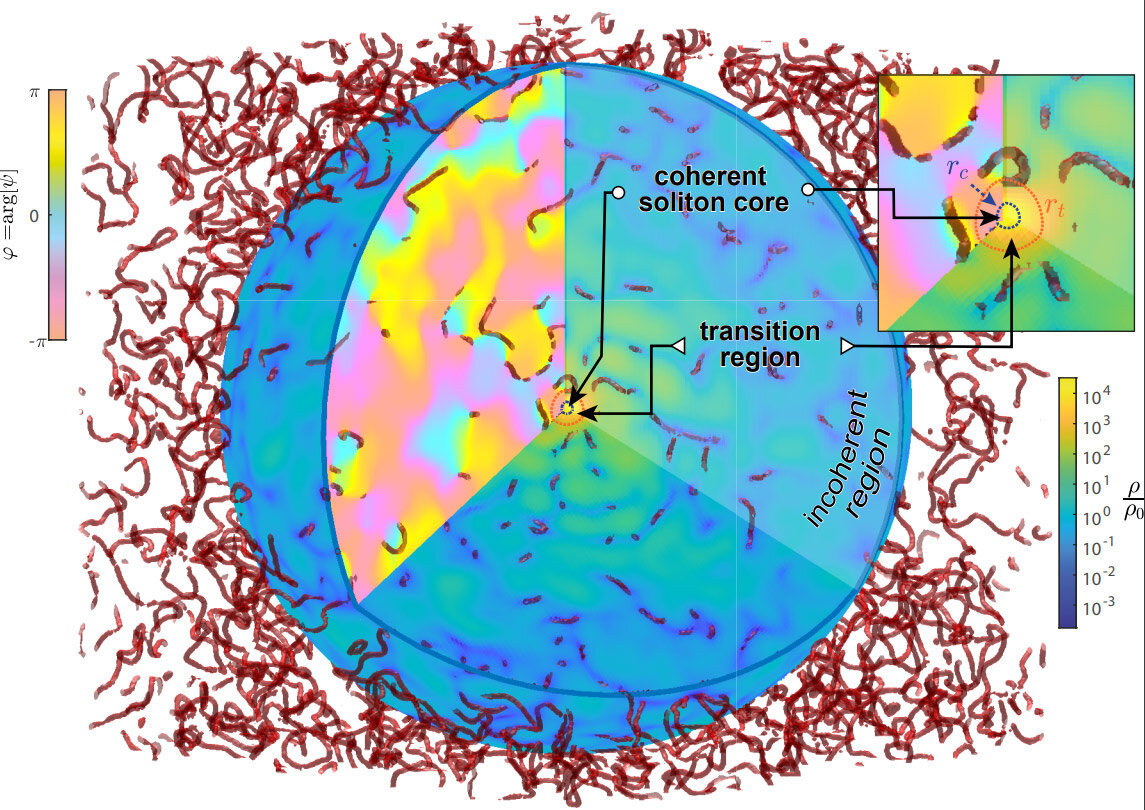
Newcastle University researchers used insights gained from the study of ultracold atomic Bose Einstein condensates to analyze the behavior of fuzzy dark matter, a new model for cosmological dark matter that has recently drawn the attention of cosmologists.

Thursday, June 8, 2023

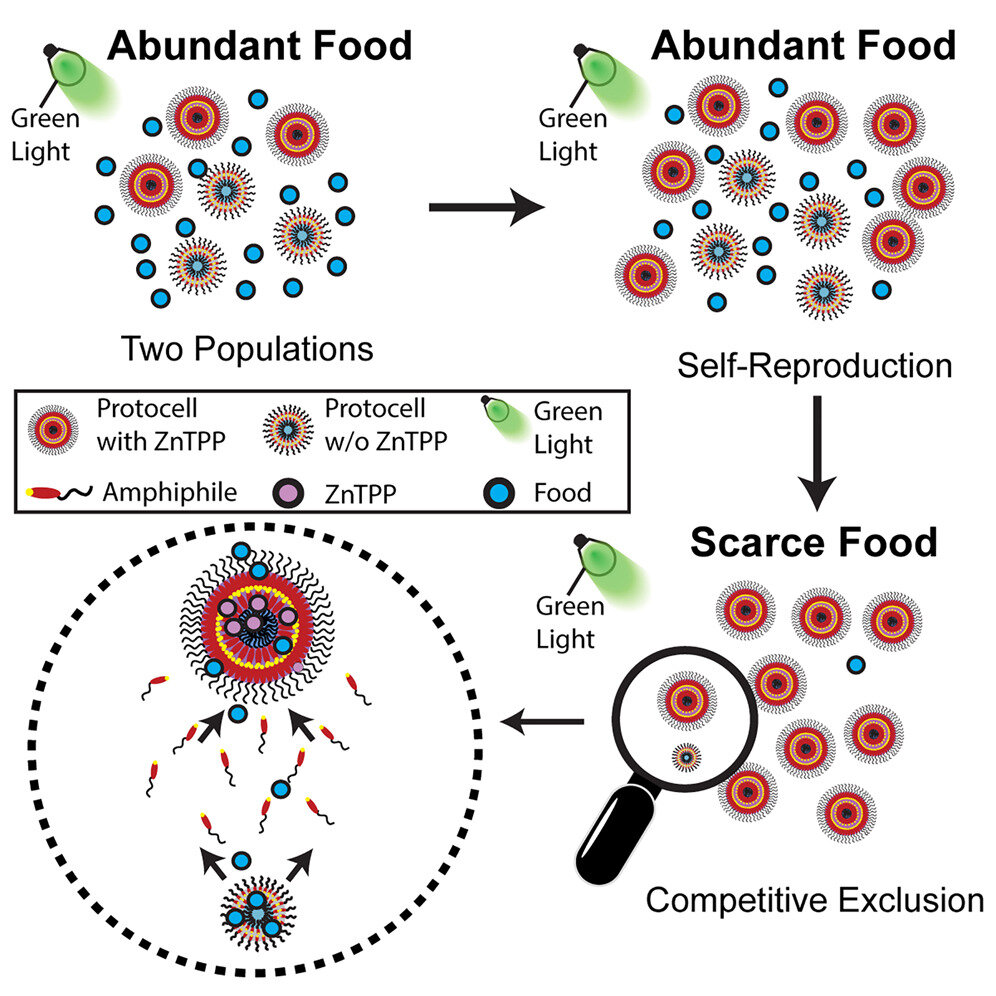
Synthetic species created without biochemistry operate according to Darwinian evolutionary principles

Imagine the possibility of life forms on other planets that don't resemble any on Earth. What might they look like, and why would they be so different?

Wednesday, June 7, 2023

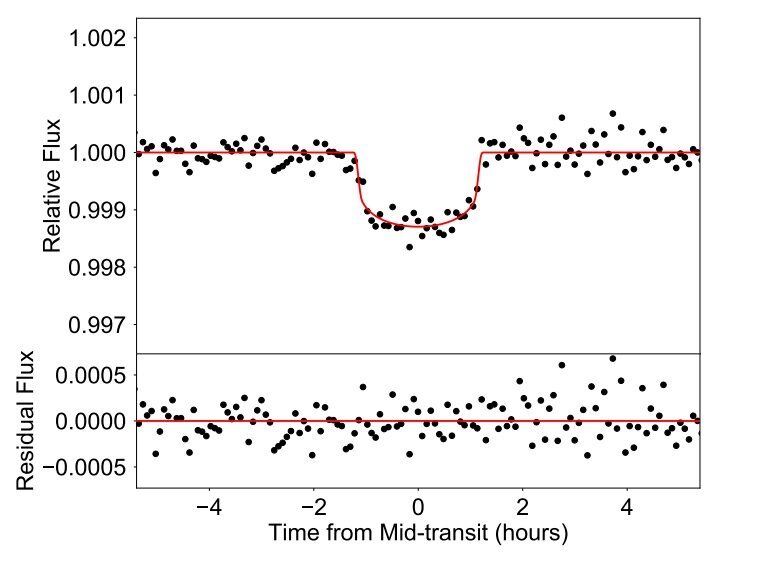
Astronomers discover a new 'warm Jupiter' on an eccentric and misaligned orbit

Using NASA's Transiting Exoplanet Survey Satellite (TESS), astronomers have discovered a new "warm Jupiter" exoplanet. The newfound alien world, designated TOI-1859 b, orbits its parent star on an eccentric and misaligned orbit. The finding is reported in a paper published May 25 on the arXiv preprint server.

Tuesday, June 6, 2023

Hubble images Messier 85

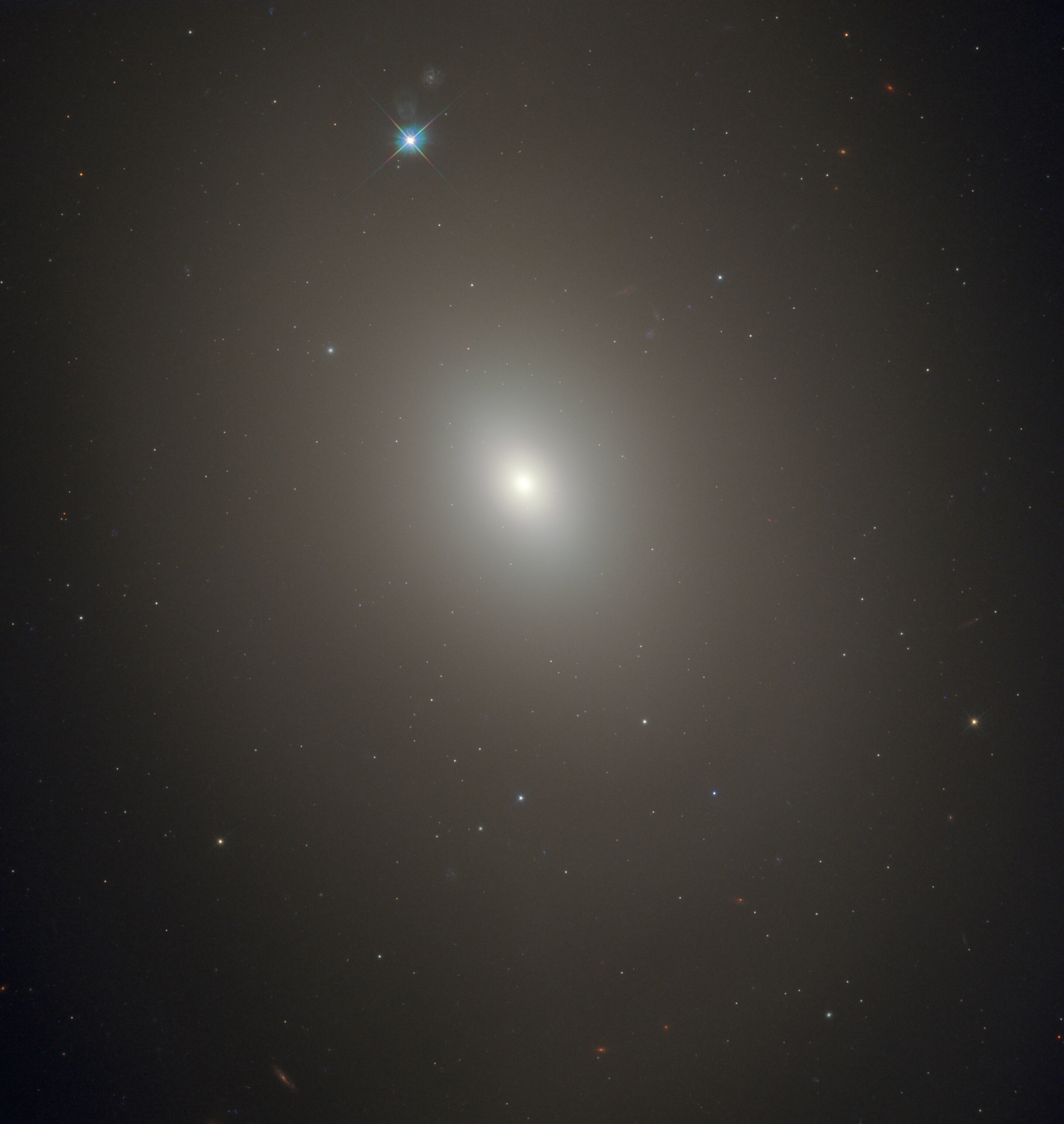
This moody image shows a galaxy named Messier 85, captured in all its delicate, hazy glory by the NASA/ESA Hubble Space Telescope. Messier 85 slants through the constellation of Coma Berenices (Berenice's Hair) and lies around 50 million light-years from Earth. It was first discovered by Charles Messier's colleague Pierre Méchain in 1781 and is included in the Messier catalog of celestial objects.

Monday, June 5, 2023

Research investigates spectral changes of blazar OJ 287

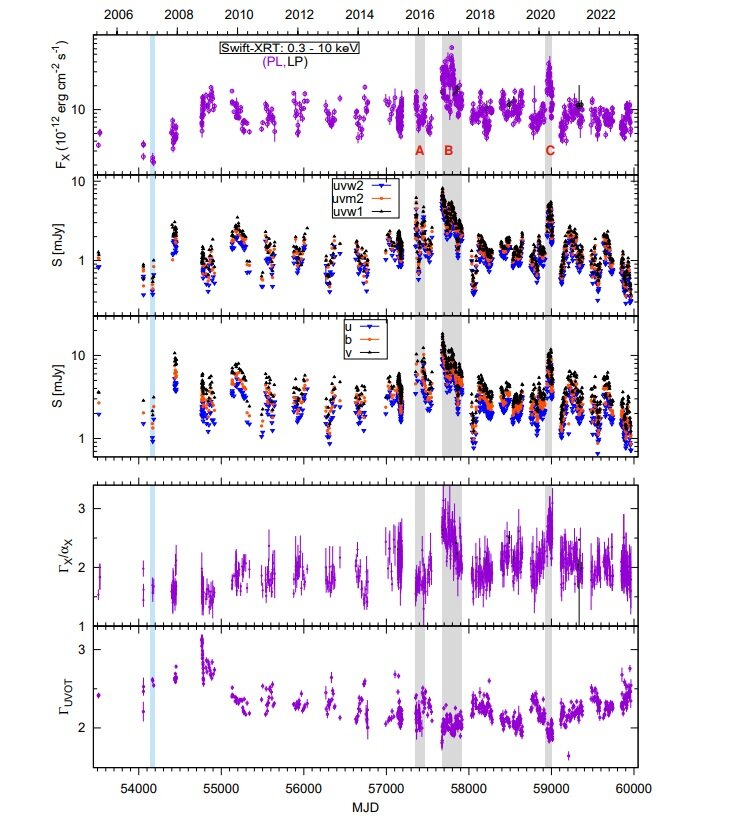
Using NASA's Neil Gherels Swift Observatory, Indian astronomers have observed a blazar known as OJ 287. Results of the observational campaign, published May 25 on the arXiv pre-print server, shed more light on the spectral changes of OJ 287, improving our knowledge about the behavior of this source.

Sunday, June 4, 2023

Three Chinese astronauts return safely to Earth

Three Chinese astronauts working at the country's space station have returned safely to Earth, state media reported Sunday, hailing the mission as a "complete success".

Saturday, June 3, 2023

Soaring rhetoric: NASA mission will carry Poet Laureate Ada Limón's words to Jupiter

A new work by U.S. Poet Laureate Ada Limón, written for an upcoming NASA mission to Jupiter's moon Europa, is a glance at outer space that returns back to Earth.

Friday, June 2, 2023

New hot DOG in the sky: Astronomers discover a hot-dust-obscured galaxy

An international team of astronomers reports the detection of a new, hot-dust-obscured galaxy (DOG). The galaxy, which received designation WISE J190445.04+485308.9, was found at a relatively low redshift of 0.415, which makes it the first confirmed low-redshift hot DOG. The discovery was presented in a paper published May 23 on the arXiv preprint server.

Thursday, June 1, 2023

Private flight with 2 Saudi astronauts returns from space station with Gulf of Mexico splashdown

A private flight carrying two Saudi astronauts and other passengers returned to Earth late Tuesday night after a nine-day trip to the International Space Station.