This is default featured slide 1 title

Go to Blogger edit html and find these sentences.Now replace these sentences with your own descriptions.

This is default featured slide 2 title

Go to Blogger edit html and find these sentences.Now replace these sentences with your own descriptions.

This is default featured slide 3 title

Go to Blogger edit html and find these sentences.Now replace these sentences with your own descriptions.

This is default featured slide 4 title

Go to Blogger edit html and find these sentences.Now replace these sentences with your own descriptions.

This is default featured slide 5 title

Go to Blogger edit html and find these sentences.Now replace these sentences with your own descriptions.
Monday, May 8, 2023

Bizarre exoplanet breaks all the orbital rules

In our solar system, the planetary orbits all have a similar orientation. Their orbital planes vary by a few degrees, but roughly the planets all orbit in the same direction. This invariable plane as it's known also has an orientation within a few degrees of the sun's rotational plane. Most planetary systems have a similar arrangement, where planetary orbits and stellar rotation are roughly aligned, but a few exoplanets defy this trend, and we aren't entirely sure why.

NASA launches two small satellites to track hurricanes

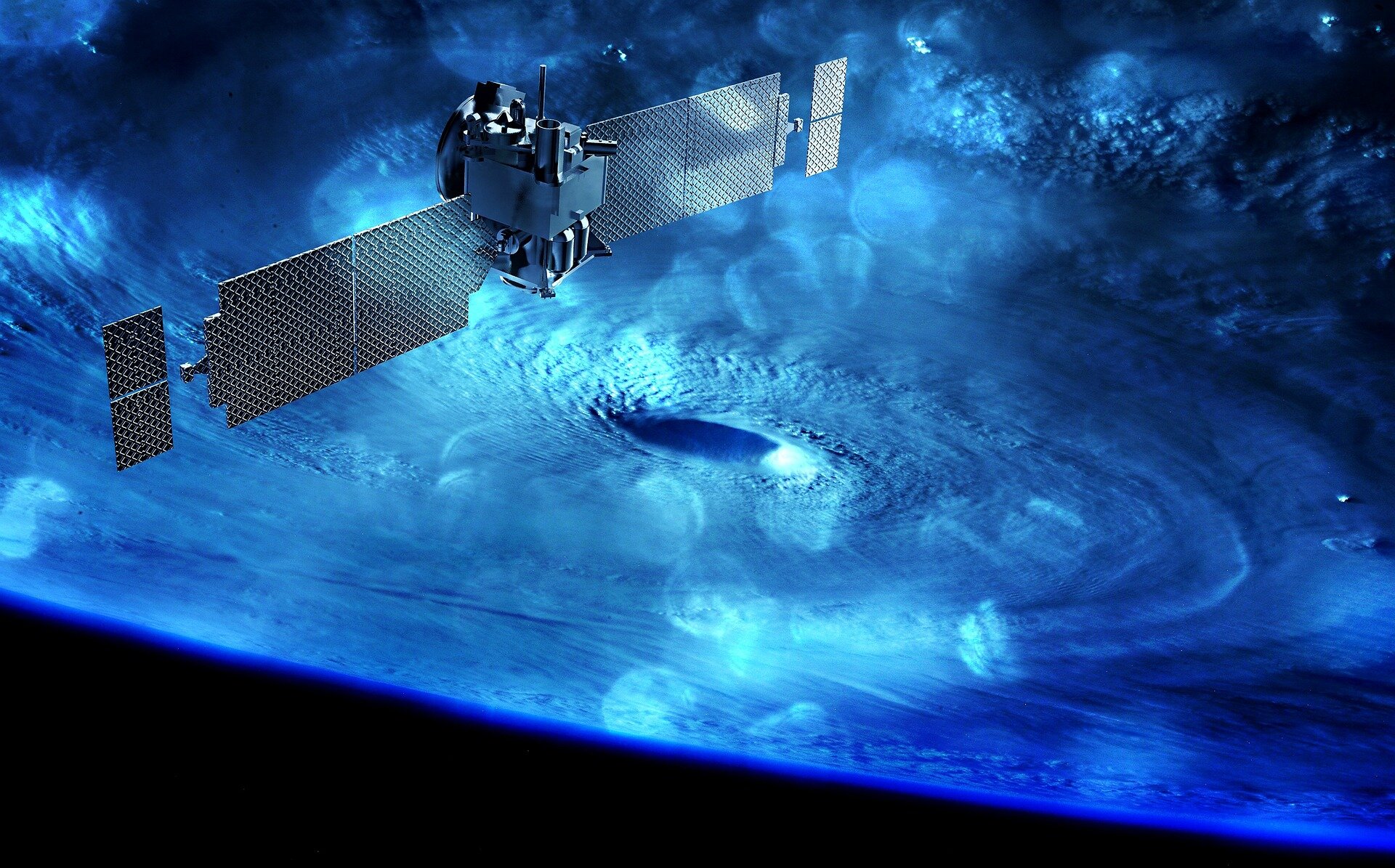
NASA launched two small satellites designed to track tropical cyclones hour by hour from a base in New Zealand on Monday, in a project that could improve weather predictions on devastating storms.

Sunday, May 7, 2023

Galactic gobble: Star swallows planet in one big gulp

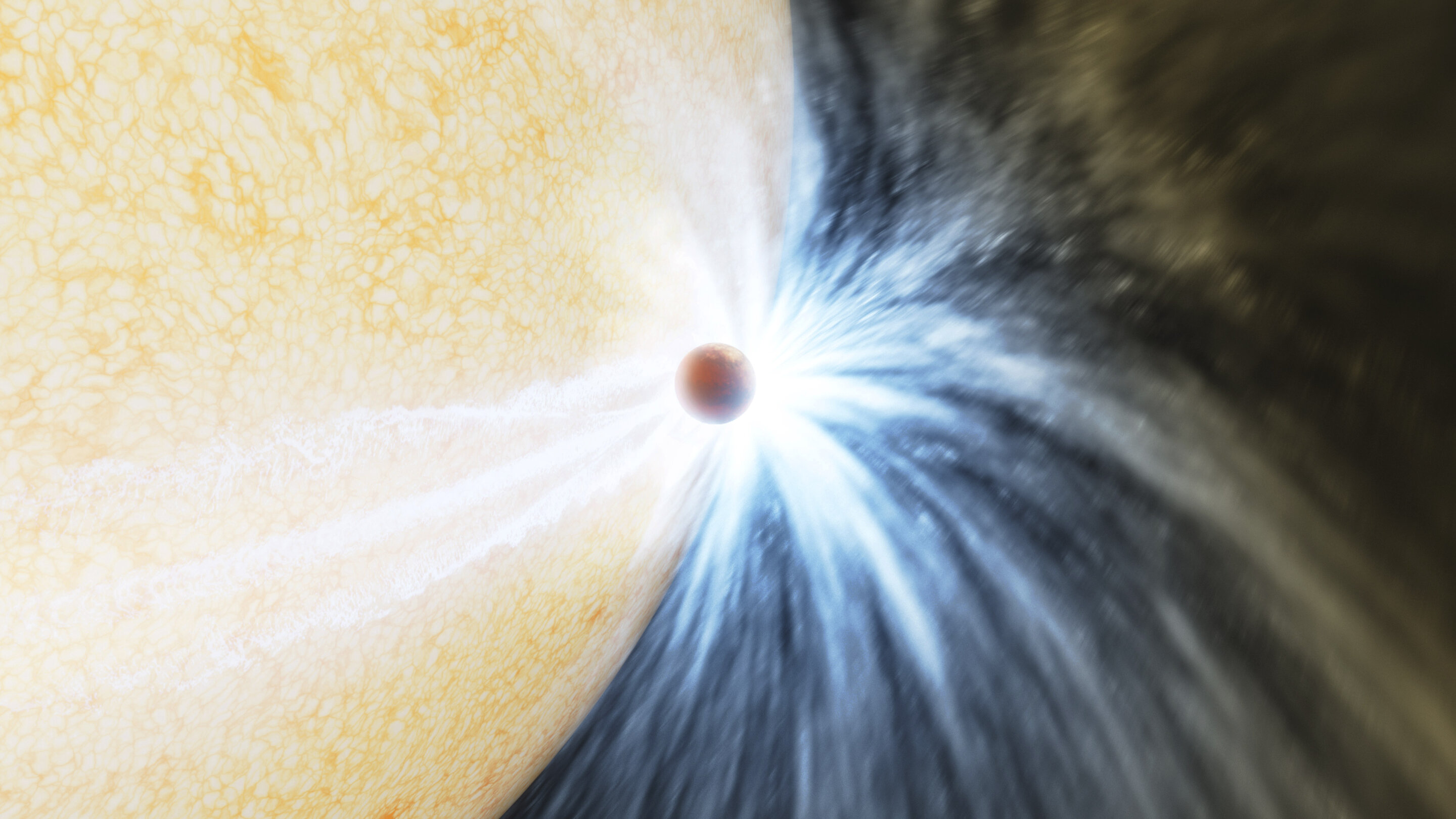
For the first time, scientists have caught a star in the act of swallowing a planet—not just a nibble or bite, but one big gulp.

Saturday, May 6, 2023

Earth from space: Farming the desert

The Copernicus Sentinel-2 mission takes us over El Oued, in northeast Algeria, about 80 km west of the border with Tunisia.

Friday, May 5, 2023

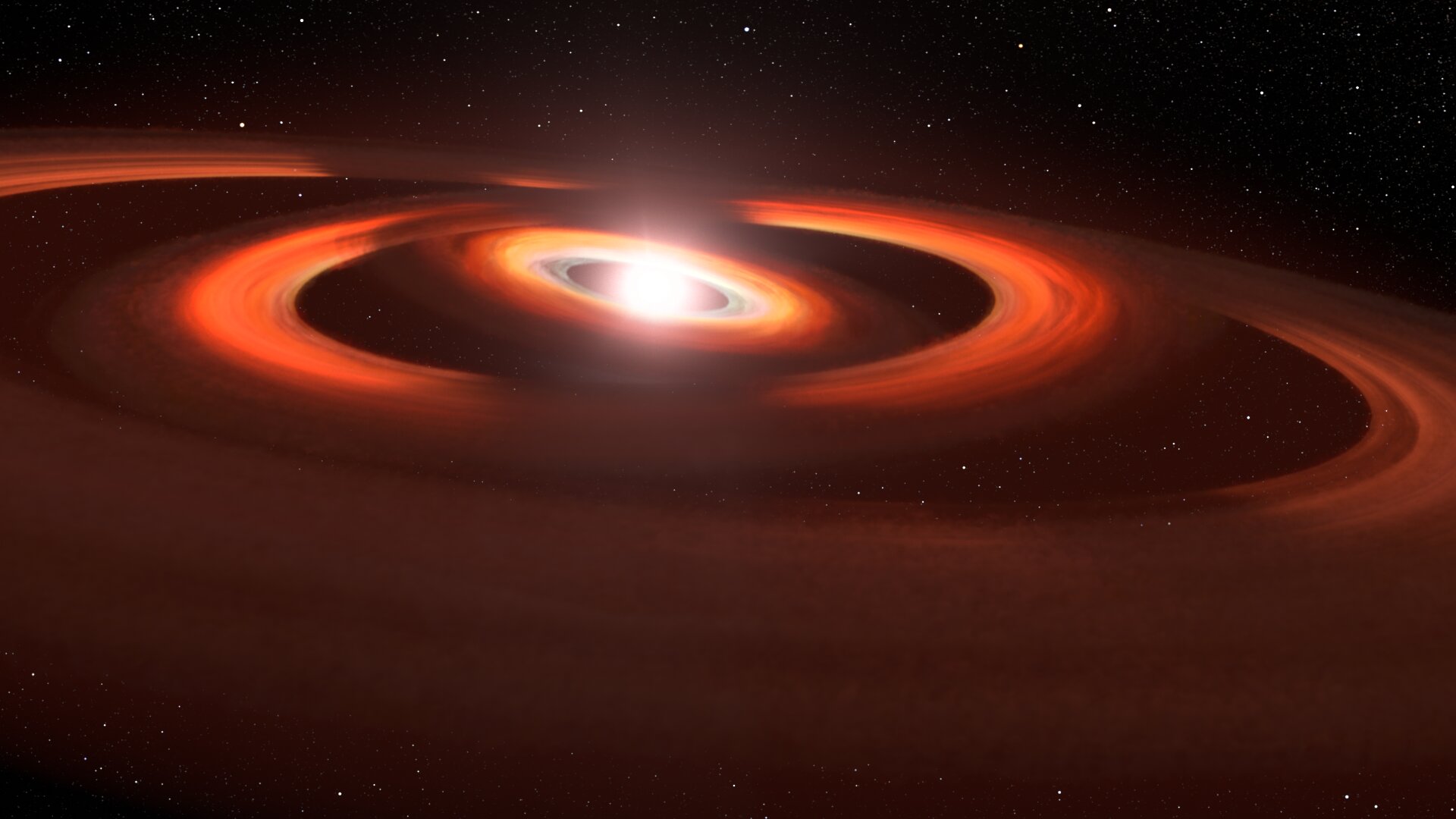
Hubble follows shadow play around planet-forming disk

The young star TW Hydrae is playing "shadow puppets" with scientists observing it with NASA's Hubble Space Telescope.

Thursday, May 4, 2023

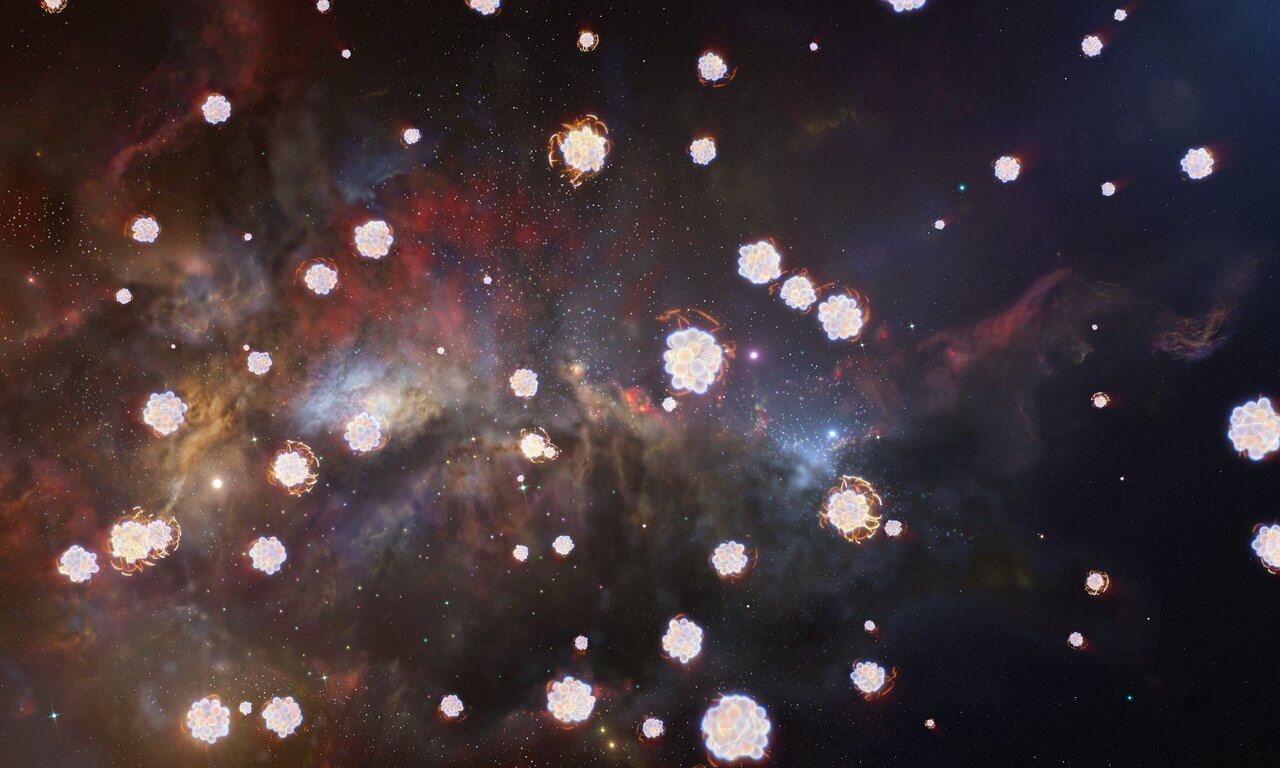
Astronomers find distant gas clouds with leftovers of the first stars

Using ESO's Very Large Telescope (VLT), researchers have found, for the first time, the fingerprints left by the explosion of the first stars in the universe. They detected three distant gas clouds whose chemical composition matches what we expect from the first stellar explosions. These findings bring us one step closer to understanding the nature of the first stars that formed after the Big Bang.

Wednesday, May 3, 2023

NASA's last S-MODE mission studies the ocean's surface

The mission is gathering observations with airborne sensors, a research ship, and autonomous instruments like gliders that skim the upper layers of the Pacific Ocean.

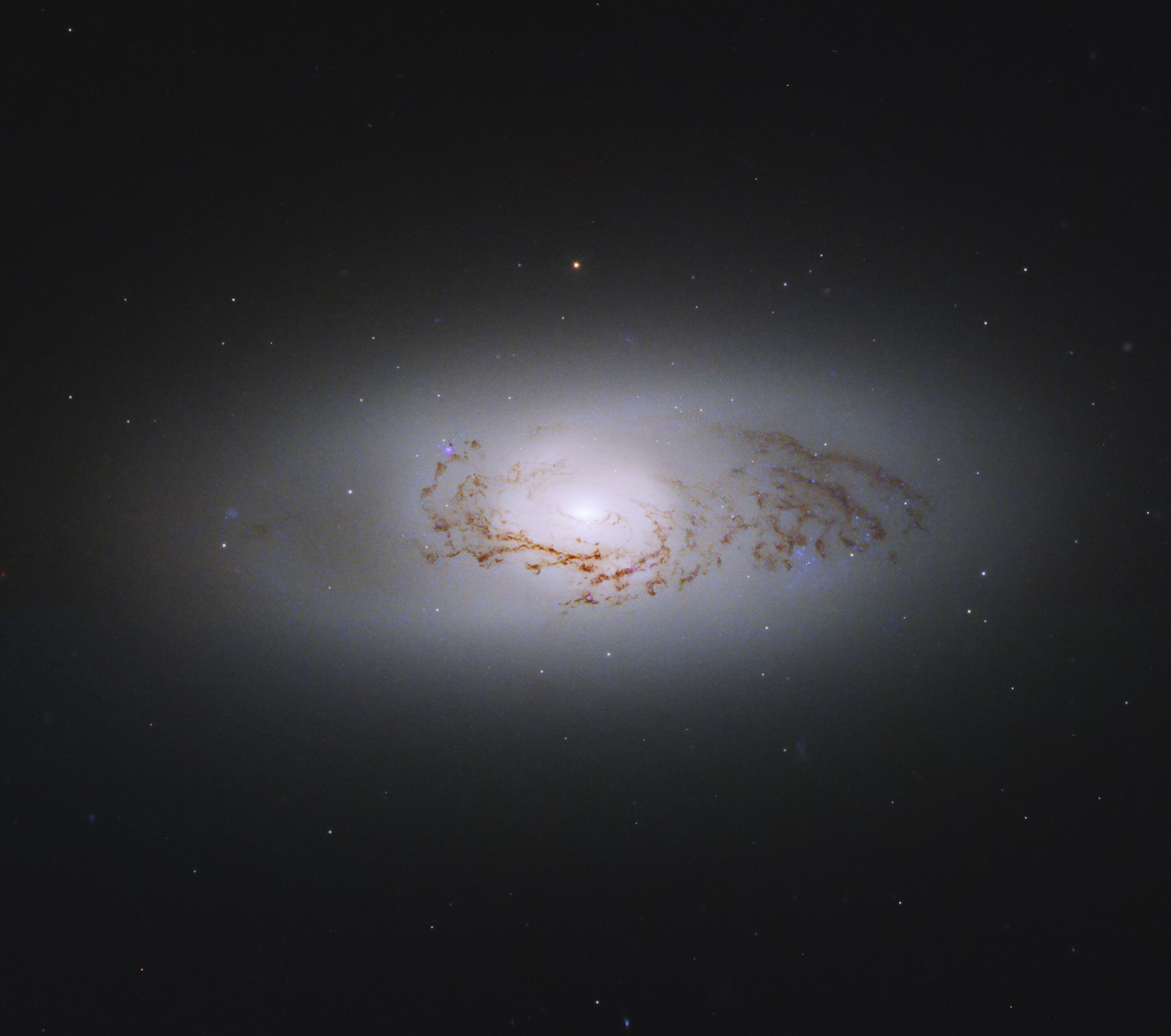
Hubble observes lenticular galaxy NGC 3489

NASA's Hubble Space Telescope captured this image of the lenticular galaxy NGC 3489. Lenticular galaxies aren't quite spiral galaxies or elliptical galaxies. They lie somewhere in between, exhibiting traits of both. Lenticular galaxies have a central bulge of tightly packed stars and a thin, circular disk of stars, gas, and dust, like spiral galaxies, but they lack arms. And like elliptical galaxies, lenticular galaxies have older stellar populations and little ongoing star formation.

Tuesday, May 2, 2023

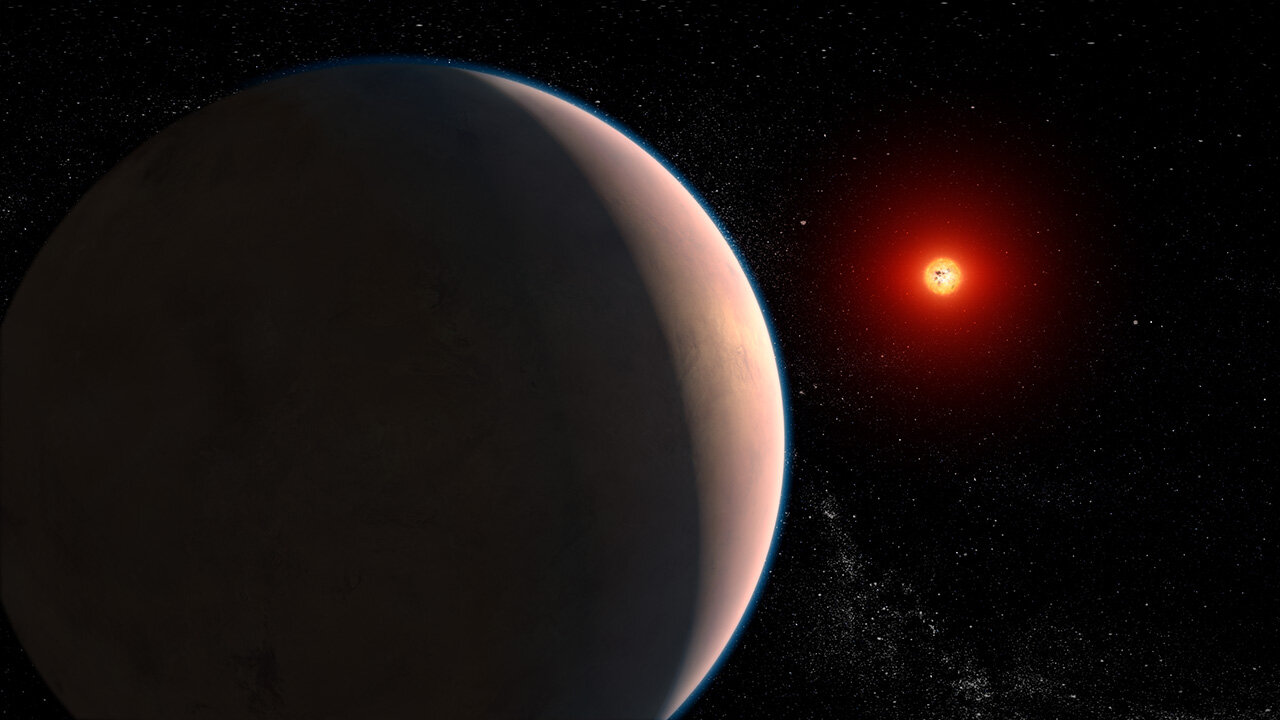
Webb finds water vapor, but is it from a rocky planet or its star?

GJ 486 b is about 30% larger than the Earth and three times as massive, which means it is a rocky world with stronger gravity than Earth. It orbits a red dwarf star in just under 1.5 Earth days. It is too close to its star to be within the habitable zone, with a surface temperature of about 800 degrees Fahrenheit. And yet, Webb observations show hints of water vapor.

Monday, May 1, 2023

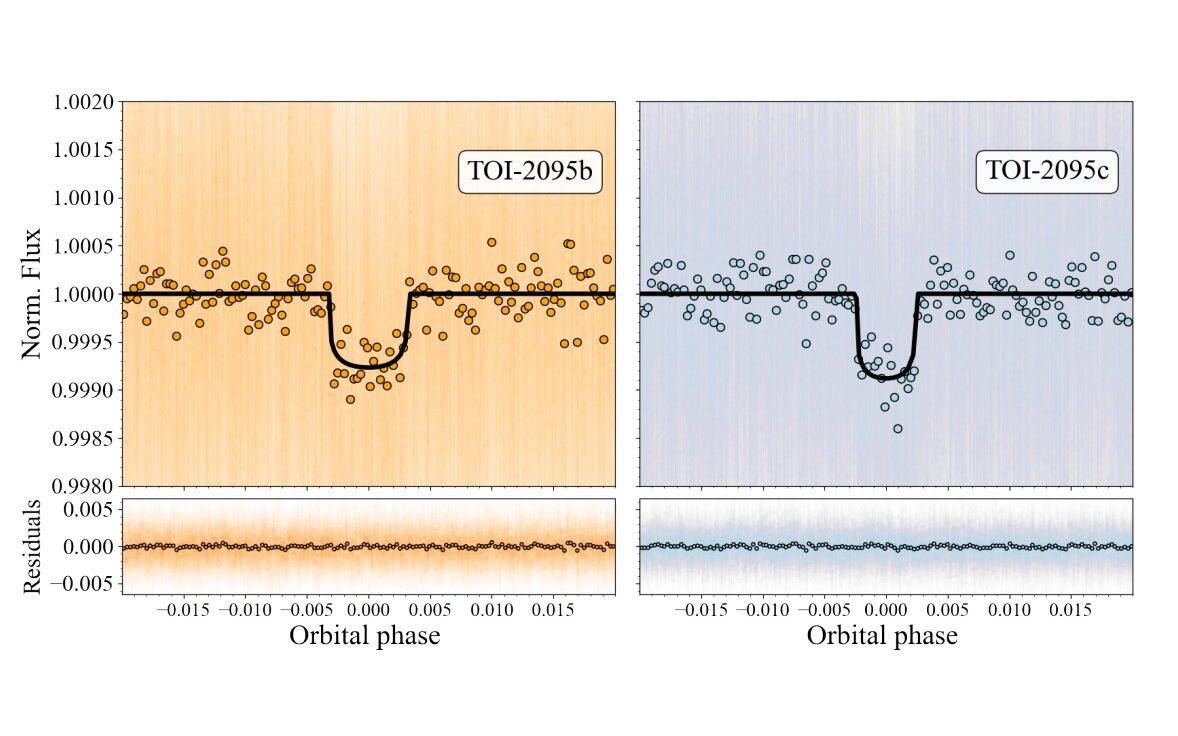
Astronomers discover two super-Earths orbiting nearby star

Using NASA's Transiting Exoplanet Survey Satellite (TESS), an international team of astronomers has discovered two "super-Earth" exoplanets orbiting a nearby M-dwarf star known as TOI-2095. The newfound alien worlds have short orbital periods and are slightly larger than the Earth. The findings were presented April 18 on the arXiv pre-print server.