This is default featured slide 1 title

Go to Blogger edit html and find these sentences.Now replace these sentences with your own descriptions.

This is default featured slide 2 title

Go to Blogger edit html and find these sentences.Now replace these sentences with your own descriptions.

This is default featured slide 3 title

Go to Blogger edit html and find these sentences.Now replace these sentences with your own descriptions.

This is default featured slide 4 title

Go to Blogger edit html and find these sentences.Now replace these sentences with your own descriptions.

This is default featured slide 5 title

Go to Blogger edit html and find these sentences.Now replace these sentences with your own descriptions.

Monday, September 2, 2024

Origins of variability in X-ray photons from a symbiotic binary star as revealed by dimensionality reduction

Symbiotic binary stars are a type of binary star system that consists of a compact star (such as a white dwarf) and a red giant star. In these systems, a compact star accretes materials from a red giant star and produces soft X-ray photons. However, some of them—known as hard X-ray-emitting symbiotic stars—also produce powerful X-ray photons, which may be due to the presence of massive white dwarfs.

Researchers explore the nature of a newborn stellar cluster

Researchers have conducted detailed infrared observations of a recently formed stellar cluster in a giant molecular cloud designated G148.24+00.41. Results of the observational campaign, presented in a research paper published August 23 on the pre-print server arXiv, deliver important insights into the nature of this newborn cluster.

NASA lines up return date for Boeing Starliner minus humans

A Butch- and Suni-less Boeing Starliner has been given a date to return to Earth by NASA.

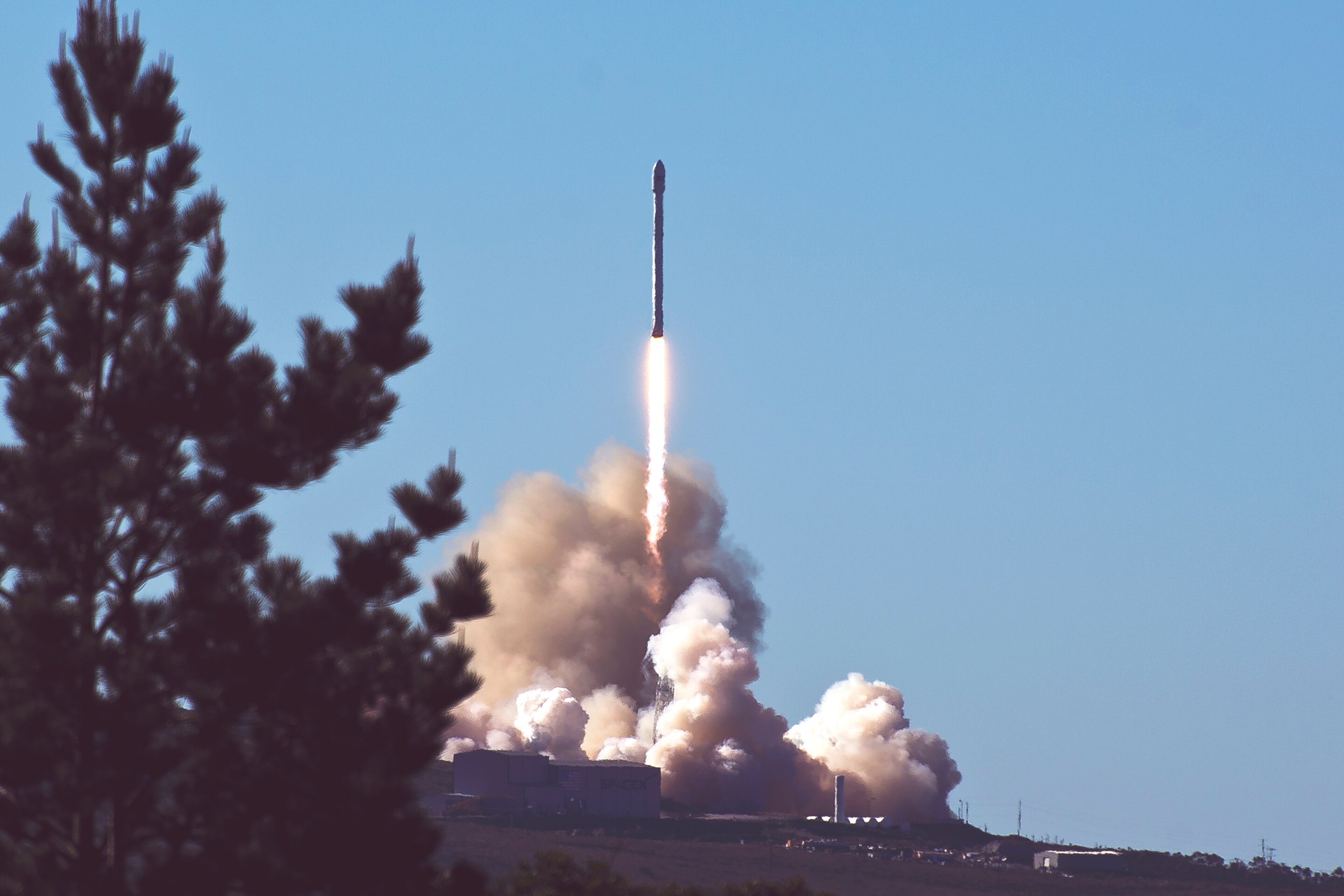
FAA lets SpaceX get back to launches, but Polaris Dawn awaits good weather

SpaceX got the OK to fly again from the Federal Aviation Administration and didn't waste any time knocking out launches from both Florida and California early Saturday, but the crewed Polaris Dawn launch remains on hold because of weather.

Webb discovers six new 'rogue worlds' that provide clues to star formation

Rogue planets, or free-floating planetary-mass objects (FFPMOs), are planet-sized objects that either formed in interstellar space or were part of a planetary system before gravitational perturbations kicked them out.

Sunday, September 1, 2024

NASA's new solar sail extends its booms and sets sail

Solar sails are an exciting way to travel through the solar system because they get their propulsion from the sun. NASA has developed several solar sails, and their newest, the Advanced Composite Solar Sail System (or ACS3), launched a few months ago into low Earth orbit.

Naval Research Laboratory's LARADO instrument to detect lethal orbital debris, integrated on STP satellite

U.S. Naval Research Laboratory's (NRL) Lightsheet Anomaly Resolution and Debris Observation (LARADO) instrument was successfully integrated and tested on the Space Test Program Satellite 7 (STPSat-7) spacecraft at National Aeronautics and Space Administration (NASA) Johnson Space Center, Houston, Texas, on July 17, 2024.

Hubble zooms into the rosy tendrils of Andromeda

Clusters of stars set the interstellar medium ablaze in the Andromeda galaxy about 2.5 million light-years away. Also known as M31, Andromeda is the Milky Way's closest major galaxy. It measures approximately 152,000 light-years across and, with almost the same mass as our home galaxy, is headed for a collision with the Milky Way in 2–4 billion years. In the meantime, Andromeda remains an object of study for many astronomers.

Image: Saharan dust in the wind

The Suomi NPP satellite acquired this image of a plume of Saharan dust as winds lofted it over the Atlantic Ocean on Aug. 24, 2024.

NASA G-IV plane will carry next-generation science instrument

In June 2024, a new tail number swept the sky above NASA's Armstrong Flight Research Center in Edwards, California. Pilots conducted flights of a Gulfstream IV (G-IV) to evaluate its handling characteristics and to familiarize pilots with it before it begins structural modifications. The research plane is joining the center's fleet serving NASA's Airborne Science program.