This is default featured slide 1 title

Go to Blogger edit html and find these sentences.Now replace these sentences with your own descriptions.

This is default featured slide 2 title

Go to Blogger edit html and find these sentences.Now replace these sentences with your own descriptions.

This is default featured slide 3 title

Go to Blogger edit html and find these sentences.Now replace these sentences with your own descriptions.

This is default featured slide 4 title

Go to Blogger edit html and find these sentences.Now replace these sentences with your own descriptions.

This is default featured slide 5 title

Go to Blogger edit html and find these sentences.Now replace these sentences with your own descriptions.

Monday, October 31, 2022

China's 'space dream': A Long March to the Moon and beyond

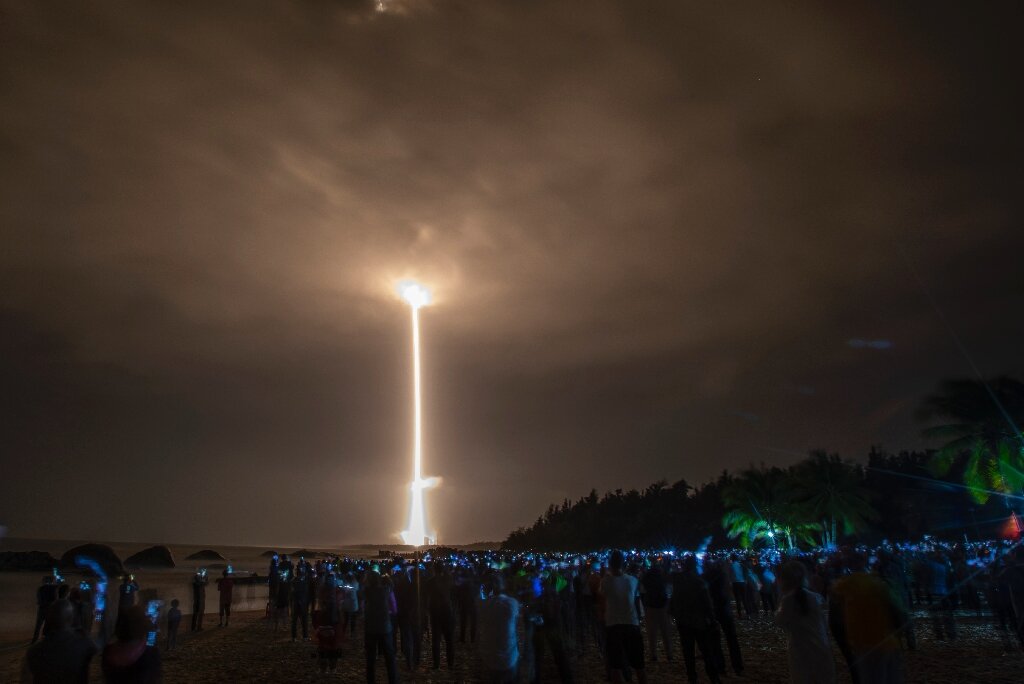
China successfully launched the final module of its Tiangong space station on Monday, inching closer to completion by the end of the year and a landmark moment in the country's space ambitions.

China launches 3rd and final space station component

China on Monday launched the third and final module to complete its permanent space station, realizing a more than decade-long endeavor to maintain a constant crewed presence in orbit.

Sunday, October 30, 2022

Radioactive traces in tree rings reveal Earth's history of unexplained 'radiation storms'

In searching for planets and studying their stars, I've had the privilege to use some of the world's great telescopes. However, our team has recently turned to an even larger system to study the cosmos: Earth's forests.

Two NASA spacecraft detect biggest meteor strikes at Mars

Two NASA spacecraft at Mars—one on the surface and the other in orbit—have recorded the biggest meteor strikes and impact craters yet.

Saturday, October 29, 2022

NASA's InSight lander detects stunning meteoroid impact on Mars

NASA's InSight lander recorded a magnitude 4 marsquake last Dec. 24, but scientists learned only later the cause of that quake: a meteoroid strike estimated to be one of the biggest seen on Mars since NASA began exploring the cosmos. What's more, the meteoroid excavated boulder-size chunks of ice buried closer to the Martian equator than ever found before—a discovery with implications for NASA's future plans to send astronauts to the Red Planet.

Friday, October 28, 2022

Rare earth element synthesis confirmed in neutron star mergers

A group of researchers has, for the first time, identified rare earth elements produced by neutron star mergers.

Thursday, October 27, 2022

New technique to determine age will open new era of planetary science, researchers say

The coming decade is expected to bring a veritable bonanza for the science of planets: space missions are scheduled to bring back samples of rock from the moon, Mars, the Martian moon of Phobos, and a primitive asteroid. And scientists say there is a new technique for determining the age of rocks, meteorites, and even artifacts, that could help open up a new era of discovery.

Wednesday, October 26, 2022

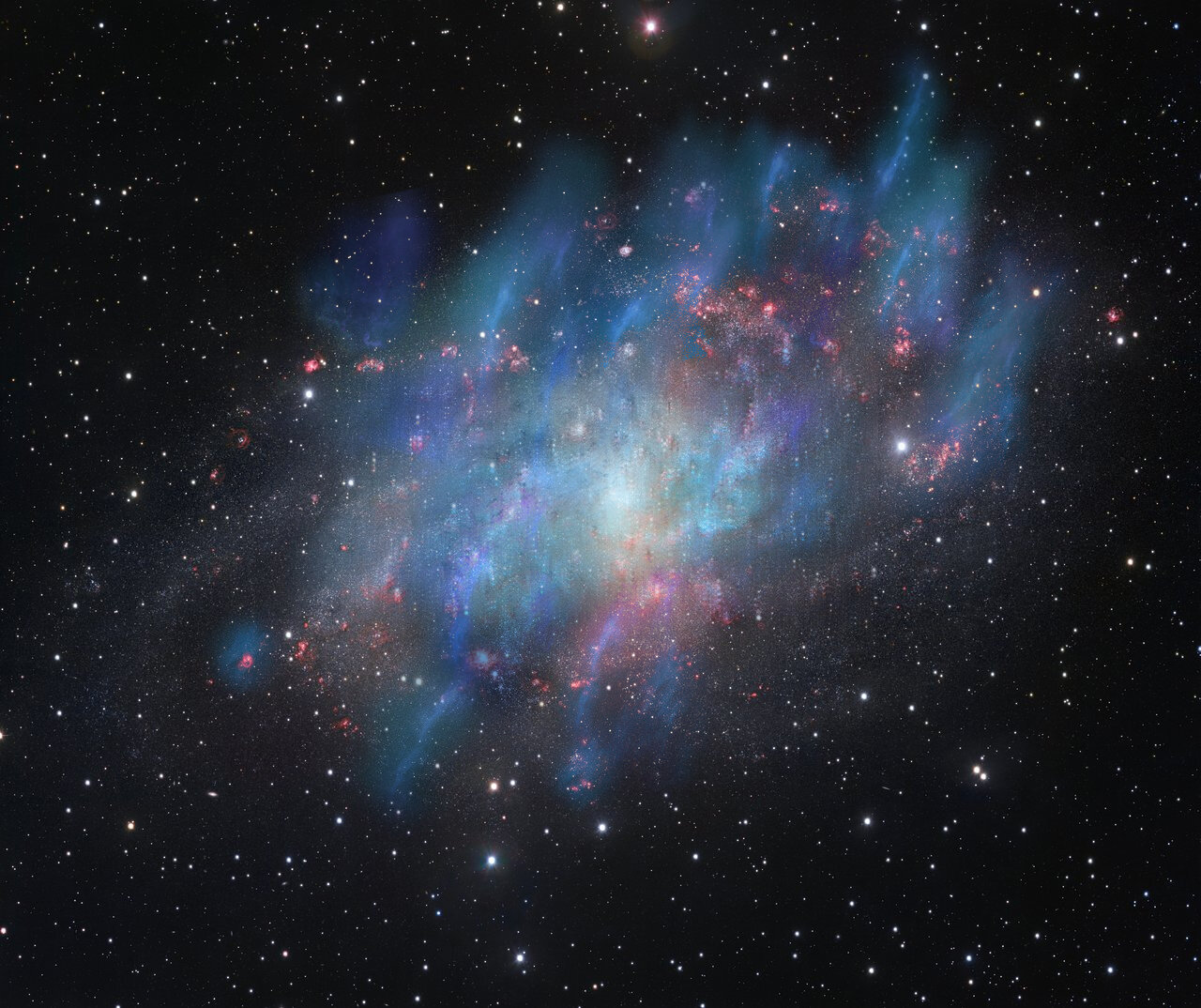
Astronomers find cosmic rays driving galaxy's winds

Astronomers using the National Science Foundation's Karl G. Jansky Very Large Array (VLA) have discovered an important new clue about how galaxies put the brakes on vigorous episodes of star formation. Their new study of the neighboring galaxy M33 indicates that fast-moving cosmic ray electrons can drive winds that blow away the gas needed to form new stars.

Tuesday, October 25, 2022

Analysis of gases recovered from asteroid Ryugu by Hayabusa2 spacecraft

Three international teams of researchers studying samples of gases recovered by the Hayabusa2 spacecraft from the near-Earth asteroid Ryugu have published their results. The first studied the asteroid's volatile sources and recent surface evolution. The second looked at its nucleosynthetic heritage. And the third team provided an overview of the types of gases that were returned. The first team has published their results in the journal Science; the second and third teams have both have published their results in the journal Science Advances.

Monday, October 24, 2022

Science sleuths solve century-old mystery of Martian meteorite's discovery

A toxin that makes pigs vomit is the surprising key which has unlocked the century-old mystery of the origins of a Martian meteorite, and the possible identity of the Black student who discovered it.