This is default featured slide 1 title

Go to Blogger edit html and find these sentences.Now replace these sentences with your own descriptions.

This is default featured slide 2 title

Go to Blogger edit html and find these sentences.Now replace these sentences with your own descriptions.

This is default featured slide 3 title

Go to Blogger edit html and find these sentences.Now replace these sentences with your own descriptions.

This is default featured slide 4 title

Go to Blogger edit html and find these sentences.Now replace these sentences with your own descriptions.

This is default featured slide 5 title

Go to Blogger edit html and find these sentences.Now replace these sentences with your own descriptions.
Friday, March 31, 2023

Astronomers observe X-ray binary XTE J1739−285 during recent outbursts

Using AstroSat and NuSTAR space telescopes, astronomers have observed an X-ray binary known as XTE J1739−285 during its recent period of bursting activity. Results of the observational campaign, published March 23 on the arXiv pre-print server, yield crucial insights into the behavior of this system.

Thursday, March 30, 2023

Don't take batteries to the moon or Mars, 3D print them when you get there

When the Artemis astronauts and future explorers go to the moon and Mars, they'll need power. Lots of it. Of course, they'll use solar panels to generate the juice they need for habitats, experiments, rovers, and so on. But, they'll need batteries for power storage. Those things weigh a lot and cost a fortune to send up from Earth. So, why not simply 3D print their own when they get there?

New paper investigates exoplanet climates

Inspired by the Milankovitch cycles that play a role in Earth's climate over time, new research at Florida Tech examines how these recurring orbital movements may affect the climate of exoplanets.

Wednesday, March 29, 2023

Preserving the stars: Light pollution and what you can do about it

Astronomer Carl Sagan famously said that there were more stars in the universe than grains of sand on earth.

Proba-3 complete: Formation-flying satellites fully integrated and ready for testing

The two spacecraft forming ESA's Proba-3 mission for precise formation flying in orbit are now complete. All the instruments and sensors allowing them to maneuver to millimeter scale precision relative to one another have been integrated aboard, and the pair are fully wrapped in multi-layer insulation—ready to be tested in simulated space conditions.

Tuesday, March 28, 2023

Hubble observes ram pressure stripping in galaxy JW100

The galaxy JW100 (lower right) features prominently in this image from the NASA/ESA Hubble Space Telescope. The streams of star-forming gas dripping from the disk of the galaxy like streaks of fresh paint are formed by a process called ram pressure stripping. Their resemblance to dangling tentacles led astronomers to refer to JW100 as a "jellyfish" galaxy. JW100 is more than 800 million light-years away, in the constellation Pegasus.

Joint NASA mission offers first stunning views of Earth's surface water

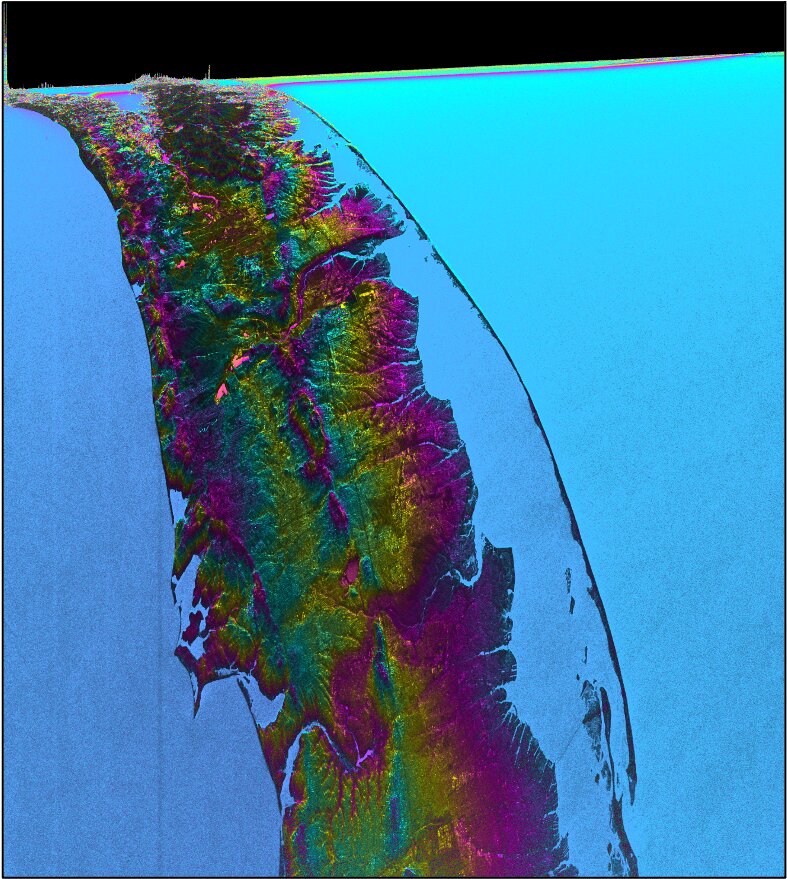
The international Surface Water and Ocean Topography (SWOT) mission—led by NASA and the French space agency Centre National d'Études Spatiales (CNES)—has sent back some of its first glimpses of water on the planet's surface, showing ocean currents like the Gulf Stream in unprecedented detail. SWOT is also capturing views of freshwater features such as lakes, rivers, and other water bodies down to about 300 feet (100 meters) wide.

Monday, March 27, 2023

Astrobiologist suggests we look for signs of life from elsewhere in the galaxy by studying space dust

Tomonori Totani, an astrobiologist with the University of Tokyo is proposing that the search for life beyond Earth be expanded to the study of space dust. In his paper published in the journal International Journal of Astrobiology, he suggests that space dust could be harboring signs of life blasted away from other planets by asteroid strikes.

Sunday, March 26, 2023

Large asteroid to zoom between Earth and Moon

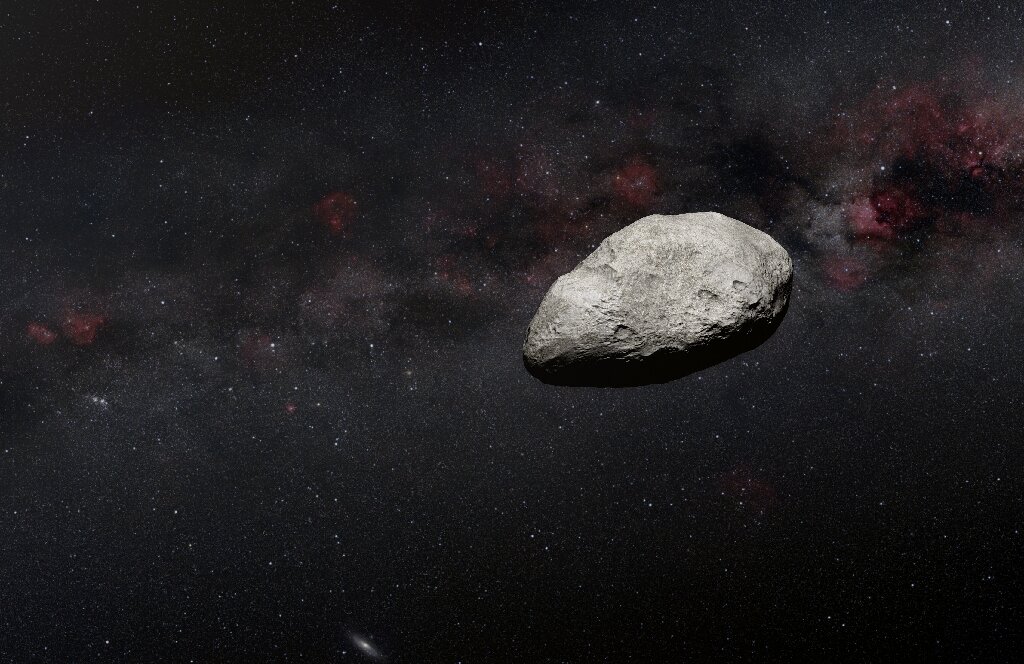
A large asteroid will safely zoom between Earth and the Moon on Saturday, a once-in-a-decade event that will be used as a training exercise for planetary defense efforts, according to the European Space Agency.

Saturday, March 25, 2023

The science of moon hopping

The videos of the first moon landing with astronauts bouncing around the lunar surface are looking like a lot of fun—but jumping around on the moon could also be good for astronaut's muscles, bones and the cardiorespiratory system.